Why Every Virtual Event Needs a Backup Plan: The Belt and Suspenders Approach
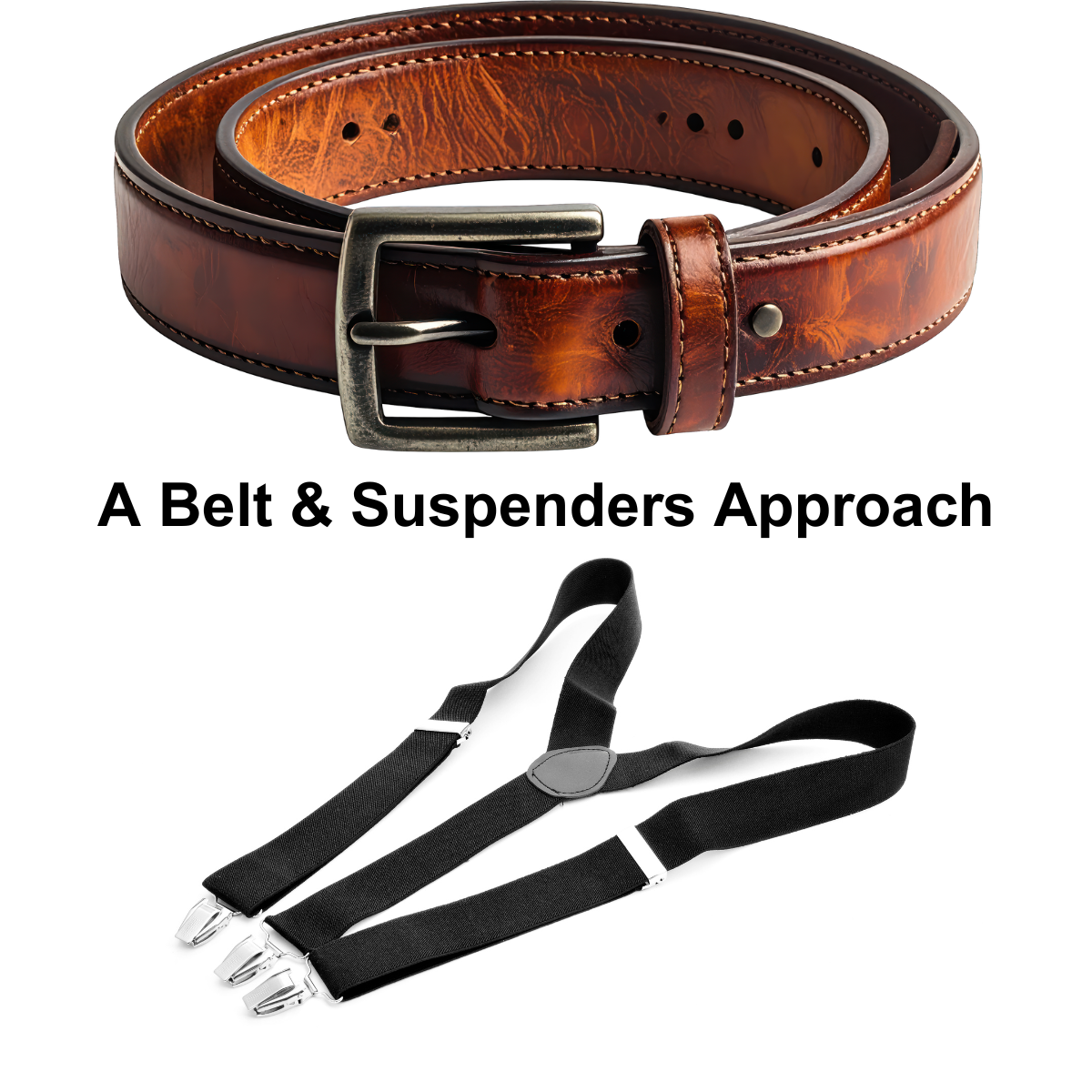
If you’ve ever worked with engineers, broadcasters, or IT professionals, you’ve probably heard the phrase "belt and suspenders."
It describes a simple philosophy: use two independent methods to accomplish something important. If one fails, the other keeps everything in place.
In virtual events, that mindset isn’t excessive.
It's professional.
When people ask why my event preparation seems so thorough, this is one of the reasons.
The audience should never notice the backup plan
A successful virtual event looks effortless.
The speaker joins on time. The videos play smoothly. The moderator and panelist appear exactly when needed. The audience never sees the scrambling that could have happened.
That's because the work was done before anyone logged in.
"Belt and suspenders" planning assumes that technology, people, and networks are all capable of surprising us. Instead of hoping nothing goes wrong, we prepare for the possibility that something will.
What does it look like?
It might mean:
- A producer has a backup of the presentation (both the presentation file and a PDF version).
- Videos are stored locally and in the cloud.
- A co-host(s) can immediately take over if the host loses internet access.
- A second device is signed in and ready.
- Contact information exists somewhere other than the meeting platform (what’s app, text thread, etc.)
- Speakers know what to do if their camera or microphone suddenly fails (tech checks are required).
- Slides can advance from more than one device (another person who can control the slides).
- There is a backup internet connection available (phone as a wifi hotspot).
Most of these backups are never used.
That’s the point.
Confidence comes from preparation
People often assume calm personalities create calm events.
I see it the other way around.
Preparation creates calm.
When you know there is another option available, you make better decisions under pressure. Instead of reacting emotionally, you simply move to Plan B.
Sometimes Plan C.
The audience rarely notices because the transition is smooth.
It isn’t about expecting failure
Some people hear "backup plan" and think it means expecting something to break.
I don't.
I expect technology to behave exactly as technology always has.
Most of the time, everything works perfectly.
Occasionally it doesn’t.
The question isn’t whether something unexpected will eventually happen.
The question is whether you’ve already decided what you’ll do when it does.
Purpose first, backup second
Purpose-First Design starts with defining success.
Then the technical decisions that support it.
Backups aren’t there because we distrust technology.
They’re there because we value the audience’s experience.
If the purpose of your event is learning, fundraising, or bringing people together, the technology should support that purpose, even when something unexpected happens.
That’s what "belt and suspenders" really means.
Not fear, but preparedness. And in virtual events, preparedness creates confidence.
What I’m Reading, Listening to and Enjoying
I only recommend books and podcasts I've genuinely enjoyed. These aren’t formal reviews, just things that made me think, taught me something new, or kept me curious.
📚 Books
Tom Lake by Ann Patchett
Why I’m mentioning it: It's set in Michigan. I added the book to my "to be read pile" after hearing an interview with Ann Patchett.
🎙 Podcasts
Podcast: National Writers Series
Episode: Ann Patchett & Tom Lake
Why it’s worth your time: Conversations with the author give insights to the writing process without spoilers.
 Pocket Casts
Feel free to share this newsletter.
My company is Calm, Clear, Media. I produce purpose-driven virtual events for nonprofits and member organizations. I don’t just manage Zoom calls; I create experiences that reflect your mission and engage your audience. My job is to make sure everything runs smoothly so my clients can focus on impact.
#VirtualEvents #CoHost #Engagement #TechSupport #Professionalism #Teamwork